
David Burr
Interviewed By Amy Hilliard
David Burr
Interviewed By Amy Hilliard
On July 1, 1975, two large blue binders entitled "The Estuaries" found their way to the office of David Burr. David was fresh out of graduate school and this was his first project at his new job. David worked as an Environmental engineer for the Southwest Florida Regional Planning Council. It was his job to prepare an environmental report for the Regional Planning Council on the proposed development "The Estuaries."
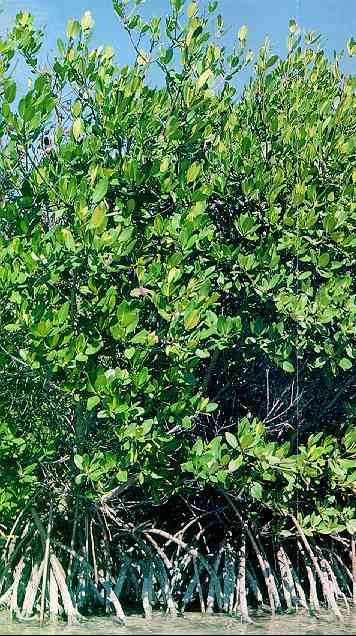
While David studied for his master's degree at University of Florida, he recalled hearing a lecture on the techniques used to develop Southwest Florida. The Environmental consultants for "The Estuaries" gave this lecture. David stated that the lecture was general, but he believes they spoke on the proposal for the development of "The Estuaries" in Estero Bay.
The lecture spoke about the importance of the red mangroves, which receive daily tidal flushing. The consultants knew that the red mangroves are important to the estuary for fixing carbon, providing habitat, and making food for fish. The consultant knew that it was important to create a sheet flow of fresh water into the red mangroves. "They theorized that they could create what they call like an interceptor waterway which would intercept the runoff from the upland areas, developed areas, and sheet flow into the red mangroves and maintain their productivity." The consultants then stated that the black mangroves, those mangroves that did not receive daily flushing, were not as important and, therefore, did not merit careful attention.
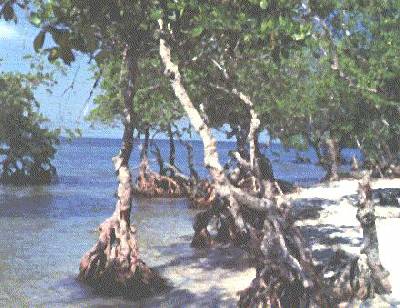
The proposed development of "The Estuaries" required almost 2,000 acres of mangroves be destroyed, 1,065 acres of which were black mangroves. These black mangroves would be replaced by the interceptor waterway planned to protect the red mangroves.
What the consultants did not
mention during the lecture was that there were other studies. After
completing the studies on the Red mangrove, environmentalists began
to look at other mangroves. These studies showed both systems to be
equally productive. The black mangroves were productive on a monthly
or seasonal basis. "Critters" would enter the black mangroves in a
nursery state and, at the next tidal flushing, would emerge as
adults. Tritus and food would be released from the black mangroves in
bulk at the spring or monthly high tides.
This was David's first project after graduate school and he did not feel up to taking on all of the developer's consultants by himself, so he decided to call on a few of his more experienced friends from school. One Dr. wrote back that he agreed with David -- the black mangroves are important and should not be destroyed. With this affirmation, David knew that he was on to something. David then went to work preparing the staff assessment on the project. The Regional Planning Council recommended a denial of the project as proposed.
In the 70s, the rules provided that the Regional Planning Council prepare a report for the local government accessing the regional environmental impact of the development. The government could then choose to accept the report or ignore it. In this case, David recommend a denial of the project as proposed and the local government accepted the report. David then turned the project over to others in his department to prepare for the inevitable court case. And, thus, David Burr's first project on the job came to an end. The rest is history . . . .